

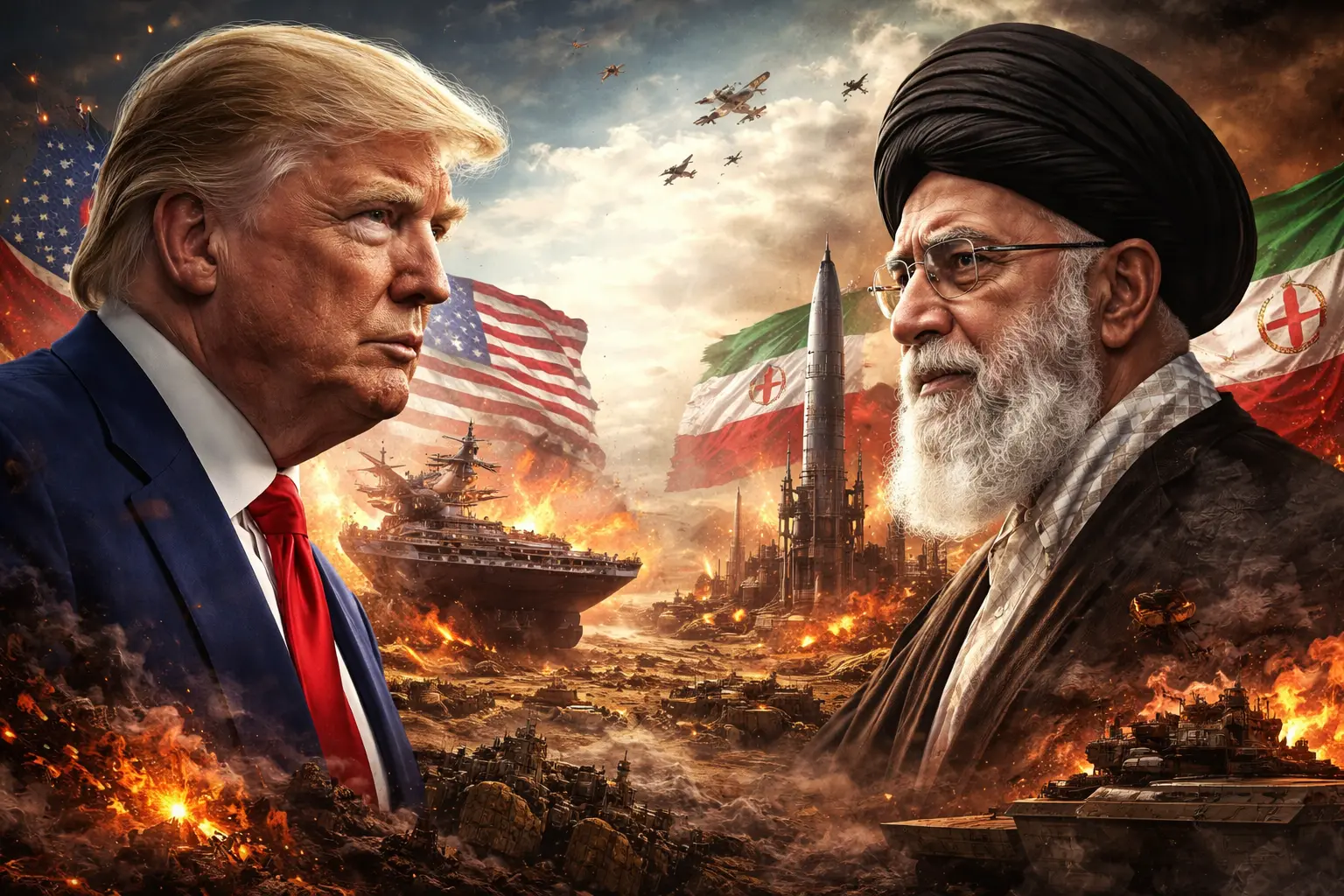
The confrontation between the United States and Iran in 2026 is not just another geopolitical conflict—it is a clash of strategic philosophies. At its core lies a fundamental question:
Should nations prioritize immediate results through decisive action, or play the long game, focusing on endurance and strategic patience?
This tension has defined the ongoing U.S.–Iran face-off, shaping military tactics, diplomatic efforts, economic decisions, and global consequences.
A Conflict Years in the Making
The current crisis is rooted in decades of hostility, but recent escalation began with a dramatic shift in early 2026. On February 28, 2026, U.S. and allied forces launched large-scale strikes targeting Iran’s military infrastructure and leadership, triggering a full-scale regional conflict.
Iran responded with missile and drone attacks across the Middle East, targeting U.S. bases and allied oil infrastructure.
The war quickly expanded beyond direct military confrontation:
- Disruption of global trade routes
- Closure and reopening of the Strait of Hormuz
- Oil price volatility
- Diplomatic breakdowns and fragile ceasefires
By April 2026, the conflict had entered a complex phase of partial ceasefires, naval blockades, and intermittent negotiations.
Immediate Results: The U.S. Strategy
The United States has largely pursued a strategy focused on rapid, decisive outcomes—what can be called the “immediate results” approach.
Major Elements of the U.S. Approach
- Overwhelming Military Force
Early strikes eliminated key Iranian leadership and degraded military infrastructure. Within weeks, Iran’s missile capabilities were significantly reduced due to sustained bombardment. - Naval Dominance and Blockade
The U.S. imposed and expanded a global naval blockade targeting Iranian shipping, including seizures of vessels attempting to bypass restrictions. - Economic Pressure
Sanctions and control of trade routes aim to cripple Iran’s economy and limit its global engagement. - Diplomatic Coercion
Negotiations are tied to strict conditions, often backed by military threats and escalation warnings.
Strengths of Immediate Results Strategy
- Rapid degradation of enemy capabilities
- Strong signaling of power and deterrence
- Short-term tactical victories
Weaknesses
- High economic and military costs
- Risk of global escalation
- Difficulty in achieving lasting political outcomes
The Long Game: Iran’s Strategic Patience
Iran, by contrast, is playing what analysts often call “the long game.” Rather than seeking immediate victory, Tehran aims to outlast pressure, preserve regime stability, and reshape the balance over time.
Most Elements of Iran’s Strategy
- Asymmetric Warfare
Use of drones, proxy forces, and indirect attacks rather than direct confrontation. - Economic Resilience
Adaptation through informal trade networks and survival-focused policies. - Strategic Disruption
Leveraging chokepoints like the Strait of Hormuz to influence global markets. - Political Endurance
A belief that time and persistence can weaken U.S. resolve and alliances.
Strengths of the Long Game
- Lower immediate costs
- Ability to impose indirect pressure on stronger adversaries
- Strategic flexibility
Weaknesses
- Economic strain on citizens
- Risk of internal instability
- Limited ability to secure decisive victories
Latest Developments : April 2026
Recent events highlight how both strategies are colliding in real time:
1. Escalation at Sea
U.S. forces have seized Iranian-linked vessels near key waterways, escalating tensions and complicating peace efforts.
2. Global Economic Shockwaves
Oil prices and financial markets have reacted sharply, showing how even limited conflict actions can ripple worldwide.
3. Expansion of U.S. Blockade
The U.S. has extended its blockade beyond regional waters, reinforcing its commitment to maximum pressure tactics.
4. Sustained Military Readiness
The U.S. continues to maintain long-term operational readiness, ensuring prolonged engagement capability if required.
Immediate vs Long Game: A Strategic Comparison
| Factor | Immediate Results (U.S.) | Long Game (Iran) |
|---|---|---|
| Objective | Quick dominance | Survival and endurance |
| Tactics | Military strikes, blockades | Asymmetric warfare, disruption |
| Time Horizon | Short-term wins | Long-term positioning |
| Risks | Escalation, resource drain | Economic hardship, instability |
| Strength | Superior firepower | Strategic patience |
Global Impact: Why This Conflict Matters?
1. Energy Markets
The Strait of Hormuz remains one of the world’s most critical oil routes. Any disruption directly impacts fuel prices, supply chains, and inflation globally.
2. Geopolitical Alliances
The conflict is reshaping alliances, with regional powers reassessing their positions and strengthening strategic partnerships.
3. Military Strategy Evolution
This war highlights the growing importance of:
- Hybrid warfare
- Economic disruption
- Cyber and drone capabilities
Immediate Results vs Long Game: Who Is Winning?
The answer depends on how success is defined.
- Militarily: The U.S. holds a strong advantage
- Strategically: Iran remains resilient
- Long-term stability: Still uncertain
The Psychological Dimension
This conflict is also a battle of narratives:
- The U.S. aims to project power and deterrence
- Iran aims to demonstrate resilience and endurance
These narratives influence global perception and negotiation leverage.
The Future: What Comes Next?
1. Negotiated Settlement
A return to talks could lead to limited agreements if both sides compromise.
2. Prolonged Stalemate
Continued low-intensity conflict with rising global costs.
3. Escalation
A breakdown in diplomacy could trigger wider regional war.
Final Thoughts
The U.S.–Iran confrontation is a defining example of immediate action versus long-term strategy.
- The U.S. emphasizes speed, strength, and decisive outcomes
- Iran relies on patience, resilience, and strategic endurance
Ultimately, neither approach guarantees success on its own. The side that effectively blends short-term tactics with long-term vision is most likely to shape the outcome. For the world, the stakes are enormous—impacting not just geopolitics, but global economic stability and security.
FAQs
The conflict escalated after major military strikes by the U.S. and its allies, followed by Iranian retaliation across the region.
It is a key global oil transit route, making it critical to energy supply and global markets.
The U.S. focuses on rapid military action, economic pressure, and strong diplomatic demands.
Iran is using a long-term approach based on endurance, asymmetric tactics, and strategic disruption.
Yes, through oil price fluctuations, trade disruptions, and increased geopolitical uncertainty.


Leave a Reply