

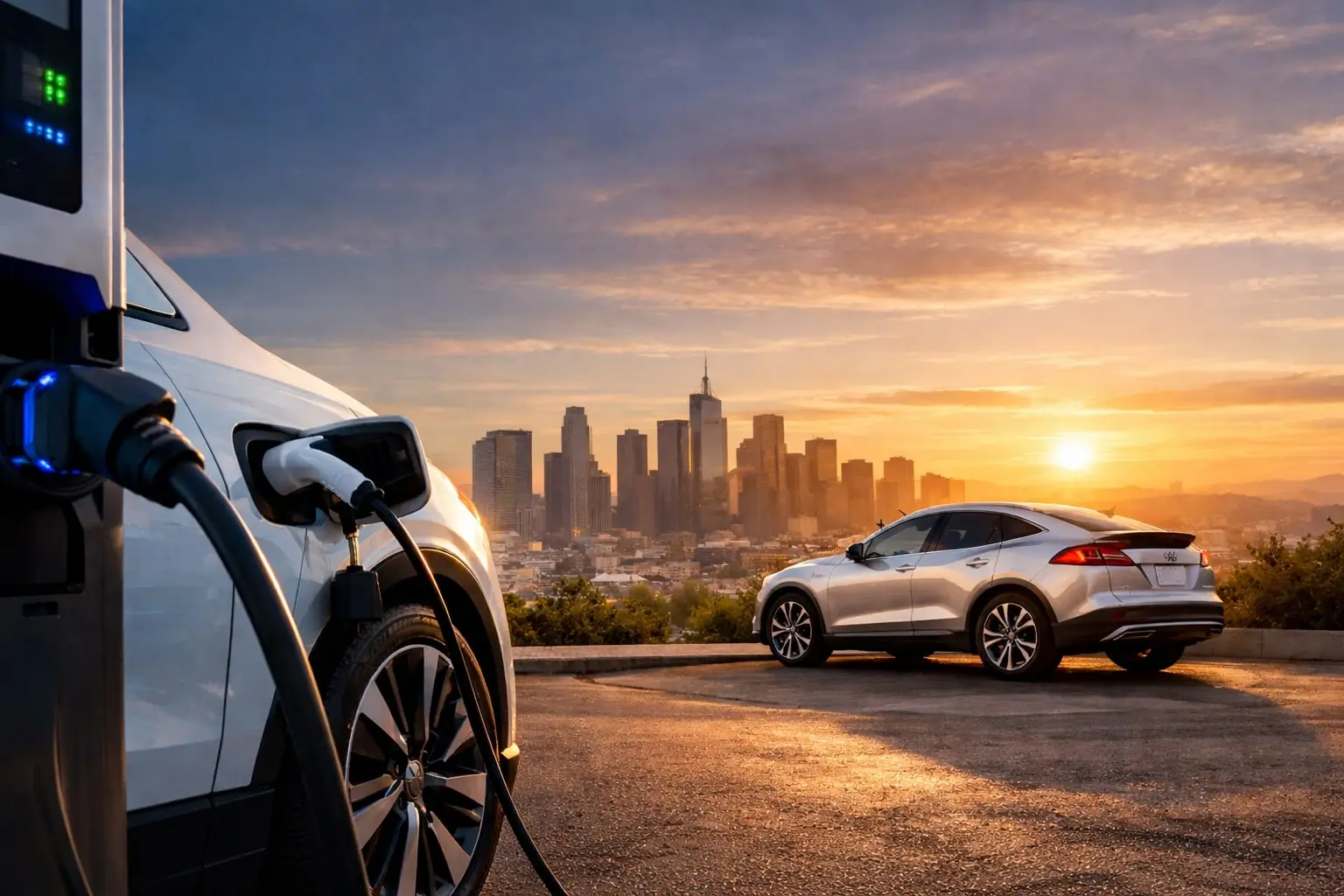
The global automobile industry is undergoing its biggest transformation in over a century. In 2026, electric vehicles (EVs) are no longer a niche or futuristic concept, they are rapidly becoming the default choice for millions of buyers worldwide. From compact city cars to luxury SUVs and heavy-duty pickup trucks, EVs are reshaping how people think about mobility, ownership, and sustainability.
Energy economist Laura Chen adds, “The transition to electric mobility is no longer driven by ideology—it’s driven by market logic. Governments, manufacturers, and consumers are aligned in a way we’ve never seen before.” These expert perspectives highlight how deeply embedded EVs have become in the modern transportation ecosystem.
What was once driven by environmental concerns alone is now fueled by economics, performance, government policy, and technological breakthroughs. This electric revolution is not a temporary trend; it represents a permanent shift in how transportation is designed, powered, and experienced.
This article explores why EVs are dominating the automobile market in 2026, the forces behind this growth, and what it means for consumers, automakers, and the future of mobility.
The Rapid Rise of Electric Vehicles
Just a decade ago, EVs accounted for a small fraction of global car sales. In 2026, electric vehicles make up a significant and growing share of new vehicle purchases across the US, Europe, China, and emerging markets. Many countries are approaching or have already crossed the tipping point where EV adoption accelerates rapidly due to infrastructure maturity and falling costs.
Major automakers have committed billions of dollars to electrification. Several brands have announced timelines to phase out internal combustion engine (ICE) vehicles entirely, while startups continue to disrupt the market with innovative designs and software-driven experiences. This rapid adoption is the result of multiple converging factors rather than a single cause.
Falling Battery Costs and Better Technology
Battery technology is at the heart of the EV revolution. In 2026, lithium-ion battery prices have dropped dramatically compared to previous years, making EVs more affordable for mainstream buyers. Advances in battery chemistry, energy density, and manufacturing efficiency have allowed automakers to offer longer driving ranges at lower costs.
Modern EVs commonly deliver ranges between 300 and 500 miles on a single charge, reducing range anxiety to near irrelevance for most drivers. Fast-charging technology has also improved, enabling drivers to add hundreds of miles of range in under 20 minutes at high-speed charging stations.
Solid-state batteries and next-generation chemistries are moving closer to commercialization, promising even greater safety, faster charging, and longer lifespan in the coming years.
Lower Total Cost of Ownership
One of the strongest reasons EVs are dominating the market in 2026 is their lower total cost of ownership. While upfront prices have become increasingly competitive with gasoline vehicles, long-term savings are where EVs truly shine.
Electric vehicles have fewer moving parts, which translates into reduced maintenance costs. There are no oil changes, fewer brake replacements due to regenerative braking, and fewer mechanical failures overall. Electricity is also significantly cheaper than gasoline in most regions, especially for drivers who charge at home or use off-peak rates. For fleet operators, rideshare drivers, and high-mileage users, the financial benefits of switching to EVs are especially compelling.
Government Policies and Regulations
Government intervention has played a crucial role in accelerating EV adoption. In 2026, stricter emissions standards, fuel economy regulations, and carbon reduction targets are pushing both consumers and manufacturers toward electric mobility.
Many countries offer incentives such as tax credits, purchase rebates, reduced registration fees, and access to special driving lanes for EV owners. At the same time, penalties on high-emission vehicles are increasing, making traditional gasoline and diesel cars less attractive.
Several cities have introduced low-emission or zero-emission zones where internal combustion vehicles face restrictions or bans. These policies make EVs not just an eco-friendly choice, but a practical necessity in urban environments.
Expanding Charging Infrastructure
Charging infrastructure has matured significantly by 2026. Public charging networks are more widespread, reliable, and faster than ever before. High-speed DC fast chargers are now common along highways, in shopping centers, workplaces, and residential complexes.
Smart charging solutions allow drivers to locate available chargers in real time, reserve charging slots, and optimize charging based on electricity prices. Wireless charging and curbside charging solutions are also emerging in urban areas, further improving convenience. Home charging remains a major advantage, allowing EV owners to start each day with a full “tank” without visiting a gas station.
Performance and Driving Experience
Electric vehicles have redefined performance expectations. Instant torque delivery gives EVs quicker acceleration than many traditional sports cars, even in affordable segments. The smooth, quiet operation enhances driving comfort, while low centers of gravity improve handling and stability.
Software-driven features such as over-the-air updates, advanced driver-assistance systems, and AI-powered infotainment systems are more common in EVs than in conventional vehicles. These features allow cars to improve over time, adding value long after purchase. For many buyers in 2026, the superior driving experience alone is reason enough to choose an EV.
Automaker Commitment and Model Variety
Another key reason EVs are dominating the market is the sheer variety of options available. In 2026, nearly every major automaker offers multiple electric models across different segments and price points.
Consumers can choose from compact EVs for city driving, electric SUVs for families, performance EVs for enthusiasts, and electric trucks for work and recreation. Luxury brands are redefining premium mobility with high-end electric sedans and SUVs that combine sustainability with cutting-edge technology. This diversity ensures that EVs are no longer limited to early adopters but appeal to a broad range of lifestyles and budgets.
Environmental and Social Awareness
While economics and performance matter, environmental awareness continues to influence consumer behavior. Climate change, air pollution, and energy security concerns are driving individuals and businesses to make more sustainable choices.
EVs produce zero tailpipe emissions, reducing urban air pollution and improving public health. When paired with renewable energy sources, their overall carbon footprint is significantly lower than that of traditional vehicles.
In 2026, sustainability is not just a personal value, it is a social expectation. Many consumers view EV ownership as a responsible and forward-thinking decision.
Automotive and energy experts widely agree that the dominance of EVs in 2026 is just the beginning. According to Dr. Michael Reynolds, an automotive technology analyst, “Electric vehicles have reached a point where they outperform internal combustion cars in cost, performance, and convenience. Once consumers experience an EV, there is rarely a desire to go back.”
Challenges That Still Remain
Despite their dominance, EVs are not without challenges. Battery recycling and raw material sourcing remain areas of concern, as demand for lithium, cobalt, and nickel continues to grow. Grid capacity and electricity generation must also keep pace with rising EV adoption.
However, investments in recycling technologies, alternative battery materials, and renewable energy are addressing these issues. The pace of innovation suggests that current challenges are transitional rather than permanent.
Final Thoughts
The electric revolution of 2026 marks a defining moment in automotive history. Electric vehicles have moved beyond early adoption and entered the mainstream, driven by affordability, performance, policy support, and environmental awareness. They are no longer the alternative, they are the future.
As technology continues to evolve and infrastructure expands, EVs will only become more efficient, accessible, and integrated into daily life. For consumers, automakers, and governments alike, the message is clear: the era of electric mobility has arrived, and it is reshaping the automobile market faster than anyone predicted.
FAQs
EVs offer lower running costs, better performance, improved charging infrastructure, and strong government support, making them more attractive than traditional cars.
Yes, falling battery costs and increased competition have made EVs more affordable, with many models priced similarly to gasoline vehicles.
Most modern EV batteries are designed to last 8–15 years, with warranties often covering up to 10 years or a specific mileage.
Charging is increasingly convenient due to widespread fast chargers and home charging options, often more convenient than visiting gas stations.
Yes, modern EVs offer long ranges and fast-charging networks that support road trips with minimal disruption.
EV technology has improved significantly, and most modern EVs perform reliably in both hot and cold climates with proper thermal management.
Yes, especially when powered by clean energy, EVs significantly reduce emissions and air pollution compared to combustion vehicles.
While gasoline cars may not disappear immediately, their market share is expected to continue declining as EVs become dominant.


Leave a Reply