

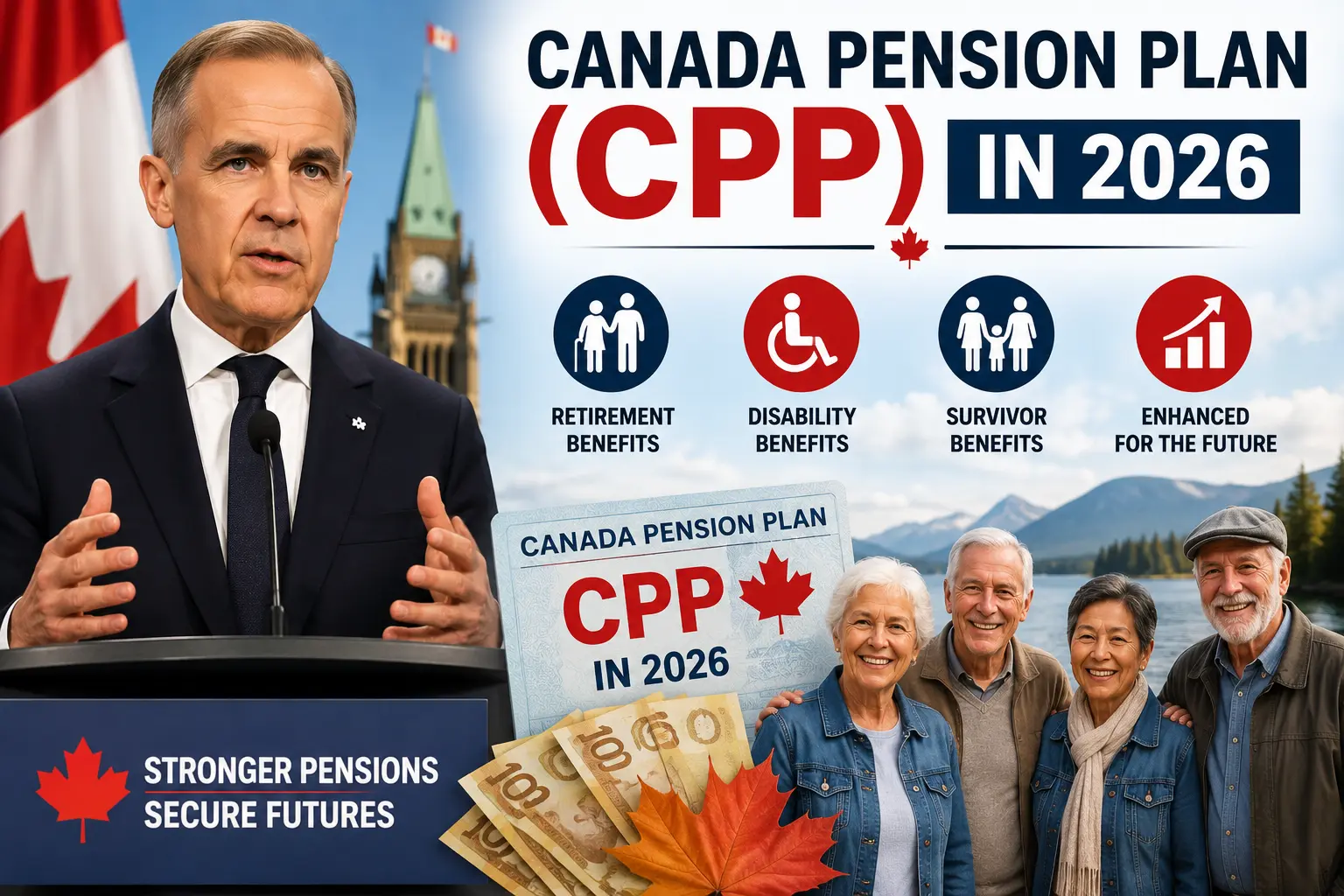
The Canada Pension Plan (CPP) remains one of the most important retirement income programs in Canada. Designed to provide financial support to workers and their families during retirement, disability, or after the death of a contributor, the CPP continues to evolve in response to economic conditions and demographic changes.
In 2026, millions of Canadians are paying close attention to CPP benefit increases, contribution rates, retirement planning strategies, and the ongoing CPP enhancement program. With inflation continuing to influence living costs, many retirees and future pensioners want to understand how recent updates could affect their monthly payments. This article explores the latest Canada Pension Plan news, current updates, eligibility requirements, payment amounts, and what beneficiaries can expect moving forward.
What Is the Canada Pension Plan?
The Canada Pension Plan is a contributory public pension program administered by the Government of Canada. Most employed and self-employed Canadians contribute to CPP during their working years. In return, they become eligible for retirement, disability, survivor, and children’s benefits under the program.
CPP provides income replacement but is not intended to be a retiree’s sole source of retirement income. Most financial experts recommend combining CPP with personal savings, workplace pensions, and government programs such as Old Age Security (OAS).
CPP in 2026 – Overview
| Category | Details |
|---|---|
| Program | Canada Pension Plan (CPP) |
| Administered By | Government of Canada |
| Retirement Age | 60–70 |
| Standard Retirement Age | 65 |
| Maximum CPP Benefit (Age 65) | Adjusted annually |
| Contribution Requirement | Employment earnings |
| Payment Frequency | Monthly |
| Enhancement Program | Ongoing |
| Coverage | Most Canadian workers |
Latest CPP Update for 2026
One of the biggest developments affecting Canadians is the continued rollout of the CPP Enhancement Program.
The enhancement was introduced to gradually increase future retirement benefits for workers who contribute to the program. The goal is to provide higher retirement income for future generations of retirees.
Key Features of the Enhancement
- Increased retirement benefits over time
- Higher contribution limits
- Greater earnings replacement rates
- Expanded retirement income security
Canadians who contribute throughout their careers under the enhanced CPP framework are expected to receive larger retirement benefits than previous generations.
CPP Benefit Increases in 2026
CPP benefits are adjusted annually based on inflation and economic indicators.
Many retirees have seen their monthly benefits increase over recent years as the government attempts to preserve purchasing power amid rising living costs.
Factors affecting benefit amounts include:
- Total years worked
- Contributions made
- Average earnings
- Age when benefits begin
- Inflation adjustments
Individuals who delay CPP beyond age 65 can significantly increase their monthly payments.
When Can You Start Receiving CPP?
Canadians can begin receiving CPP retirement benefits as early as age 60.
However, taking benefits before age 65 results in a permanent reduction in monthly payments.
Starting CPP at Age 60
Pros:
- Earlier access to income
- Useful for those retiring early
Cons:
- Reduced monthly benefit for life
Starting CPP at Age 65
Pros:
- Full standard benefit
Cons:
- Must wait longer to begin receiving payments
Delaying Until Age 70
Pros:
- Maximum monthly benefit
- Higher lifetime payments for many retirees
Cons:
- Delayed access to funds
Financial advisors often recommend evaluating health, retirement goals, and income needs before choosing a start date.
CPP Contribution Changes Continue
As part of the enhancement program, CPP contributions have gradually increased. Workers and employers both contribute to the plan based on employment income.
The enhanced CPP framework includes:
- Higher contribution rates
- Additional earnings thresholds
- Expanded future retirement benefits
While workers contribute more during their careers, the expectation is that future retirement payments will also be higher.
CPP Disability Benefits Remain Important
The Canada Pension Plan also provides disability benefits to eligible contributors who cannot work because of a severe and prolonged disability.
To qualify, applicants generally must:
- Have contributed sufficiently to CPP
- Be under age 65
- Meet disability eligibility requirements
CPP disability benefits continue to provide financial support for thousands of Canadians unable to maintain employment due to health challenges.
Survivor Benefits and Family Protection
CPP includes several benefits designed to support families after the death of a contributor.
These benefits may include:
Survivor’s Pension
Paid to the surviving spouse or common-law partner.
Children’s Benefits
Available for eligible dependent children.
Death Benefit
A one-time payment to help offset funeral-related expenses. These programs provide an important financial safety net for Canadian families.
How Much CPP Could You Receive?
CPP payments vary widely because benefits depend on each person’s work history and contributions.
Factors affecting benefit amounts include:
- Career earnings
- Number of contribution years
- Age when benefits start
- Participation in enhanced CPP
Some retirees receive modest monthly payments, while others who contributed consistently at higher income levels may qualify for significantly larger benefits.
Using the government’s retirement income calculators can help estimate future benefits.
CPP and Retirement Planning
Financial experts emphasize that CPP should be viewed as one component of a broader retirement strategy.
A comprehensive retirement plan often includes:
Old Age Security (OAS)
Available to many Canadians aged 65 and older.
Workplace Pension Plans
Employer-sponsored retirement programs.
Registered Retirement Savings Plans (RRSPs)
Tax-advantaged retirement savings.
Tax-Free Savings Accounts (TFSAs)
Flexible savings and investment options. Combining multiple income sources can help create greater financial security during retirement.
Current Challenges Facing the CPP
Although the Canada Pension Plan remains financially stable, policymakers continue monitoring several long-term challenges.
Aging Population
Canada’s growing retiree population places increasing demands on pension programs.
Inflation
Higher living costs affect retirement purchasing power.
Workforce Changes
Shifting employment patterns may impact future contributions.
Longevity
Canadians are living longer, requiring retirement income to last for more years.
The CPP Investment Board continues managing assets with a long-term strategy designed to support future obligations.
What Canadians Should Expect Going Forward?
The future of CPP remains focused on sustainability and enhancement.
Expected developments include:
- Continued implementation of CPP enhancement
- Inflation-based benefit adjustments
- Ongoing investment growth
- Increased retirement awareness among younger workers
For current retirees, annual increases help protect purchasing power. For younger workers, enhanced contributions may result in significantly larger retirement benefits in the future.
Why CPP Remains a Cornerstone of Retirement Income?
Despite economic uncertainty, the Canada Pension Plan continues to provide reliable monthly income for millions of Canadians.
Its combination of:
- Lifetime payments
- Inflation adjustments
- Survivor protections
- Disability coverage
makes it one of the country’s most important social programs. Understanding how CPP works can help Canadians make more informed retirement decisions and maximize long-term financial security.
Final Thoughts
The Canada Pension Plan remains a vital part of retirement security for millions of Canadians in 2026. With ongoing enhancements, inflation adjustments, and long-term investment management, the program continues evolving to meet the needs of current and future retirees.
Whether you’re already collecting CPP benefits or planning for retirement decades from now, understanding contribution rules, eligibility requirements, and benefit strategies can help you maximize your retirement income. As Canada continues implementing CPP enhancements, future retirees may benefit from stronger pension support than previous generations, making long-term retirement planning more important than ever.
FAQs
CPP is a government-managed pension program that provides retirement, disability, survivor, and death benefits to eligible Canadians who have contributed during their working years.
You can begin receiving CPP retirement benefits as early as age 60, although starting before age 65 results in reduced monthly payments.
CPP benefits continue to receive annual adjustments based on inflation and economic factors, helping maintain purchasing power for retirees.
The CPP enhancement is a long-term initiative designed to increase future retirement benefits through higher contributions and expanded earnings coverage.
Yes. Eligible Canadians can receive both CPP and OAS benefits simultaneously if they meet the requirements for each program.



Leave a Reply