

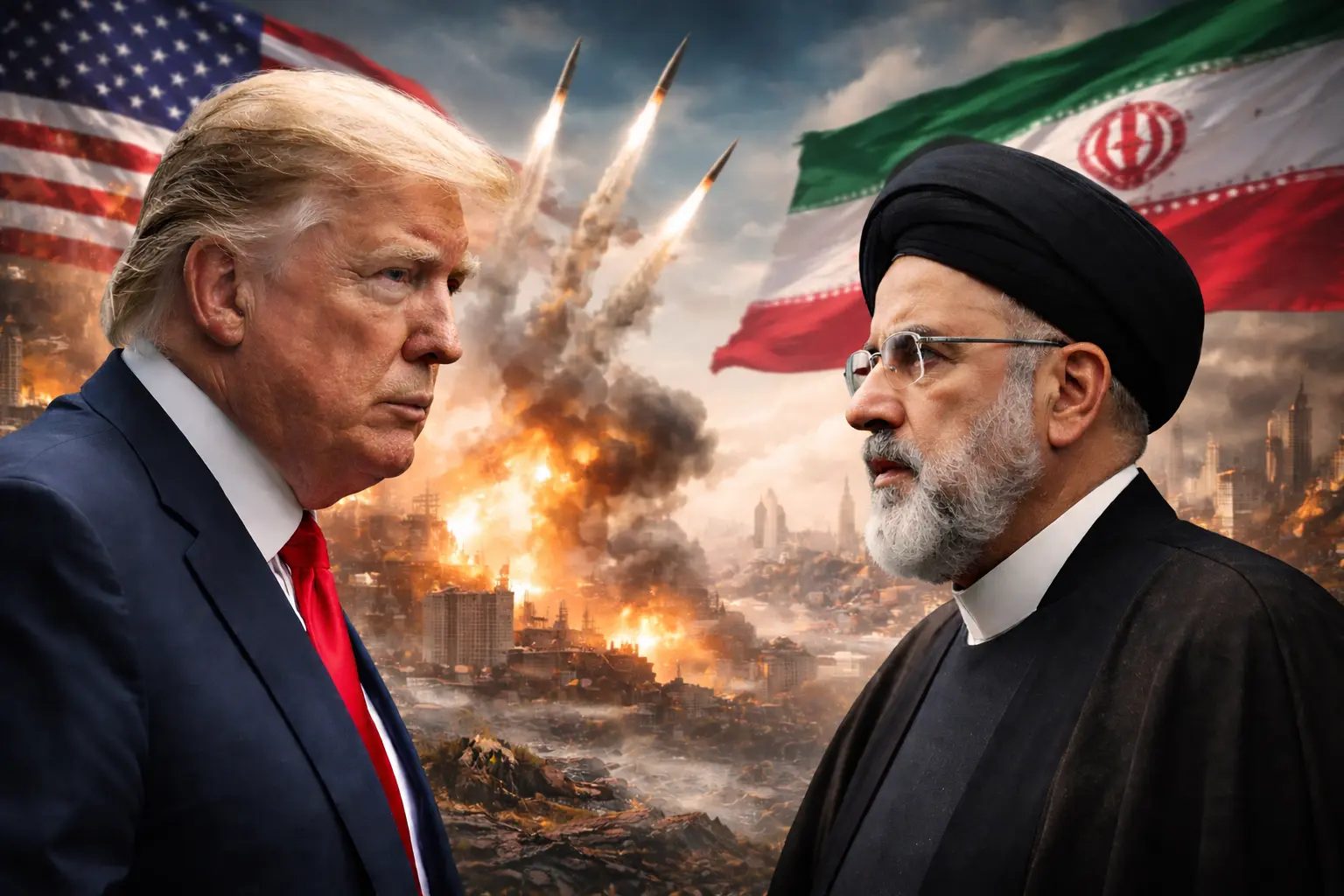
The geopolitical landscape in the Middle East has once again entered a phase of uncertainty, as Tehran and Washington exchange conflicting signals regarding the possibility of renewed negotiations. At the center of this evolving situation is Donald Trump and Iran’s leadership in Tehran, both of whom appear to be simultaneously preparing for diplomacy while escalating tensions on the ground.
This paradox—where threats of military action coexist with overtures for peace—has defined the current phase of the U.S.-Iran conflict in 2026. With a fragile ceasefire nearing expiration and new incidents unfolding in strategic waterways, the global community is watching closely to determine whether diplomacy will prevail or conflict will deepen.
The 2026 US – Iran Conflict : Background
The present crisis stems from a broader escalation that began earlier in 2026, involving U.S. and allied strikes on Iranian targets and subsequent retaliation. A key flashpoint has been the Strait of Hormuz—a narrow but vital maritime corridor through which nearly 20% of the world’s oil supply typically passes.
The U.S. imposed a naval blockade on Iran in April 2026 following failed negotiations, further intensifying the conflict. The blockade aimed to restrict Iranian oil exports and force compliance with American demands, including limits on Iran’s nuclear program and regional influence.
However, Iran has strongly resisted these measures, calling them violations of sovereignty and acts of economic warfare. The result has been a dangerous standoff, with both sides engaging in military maneuvers while publicly discussing potential talks.
Mixed Signals from Washington
President Donald Trump has delivered a series of contradictory statements regarding the path forward. On one hand, he has expressed confidence that negotiations will resume soon, potentially in Pakistan, suggesting a willingness to resolve the conflict diplomatically.
On the other hand, Trump has simultaneously taken a hardline stance:
- He indicated he is “in no rush” to end the war, asserting that Iran is in a weakened position.
- He suggested that the ceasefire is unlikely to be extended.
- He has continued to support aggressive actions, including maintaining the naval blockade.
This dual messaging reflects a strategic ambiguity—one that aims to pressure Iran into concessions while keeping diplomatic channels open. However, it also risks creating confusion among allies and adversaries alike.
Tehran’s Contradictory Posture
Iran’s response has been equally inconsistent. Officials in Tehran have:
- Denied U.S. claims of progress in negotiations, calling them exaggerated or false.
- Announced they have “no plans to participate” in upcoming talks due to alleged U.S. violations of the ceasefire.
- Simultaneously hinted that negotiations could still occur if certain conditions are met.
Iran has also accused the United States of undermining diplomacy through military actions, particularly the seizure of an Iranian vessel. This ambiguity suggests that Iran is attempting to balance domestic political pressures with the strategic need to avoid a prolonged war.
The Ship Seizure: A Turning Point?
A major escalation occurred when U.S. forces seized an Iranian-flagged cargo ship near the Strait of Hormuz. The U.S. claimed the vessel was attempting to bypass the blockade, while Iran condemned the act as “piracy.”
This incident has had several consequences:
- Iran withdrew from planned negotiations, citing the seizure as a violation of the ceasefire.
- Tensions in the region escalated, with threats of retaliation.
- Global markets reacted sharply, with oil prices surging due to fears of supply disruption.
The seizure highlights how quickly diplomatic efforts can be derailed by military actions, reinforcing the fragile nature of the current situation.
The Role of the Ceasefire
A temporary ceasefire, established earlier in April, has been a critical but unstable element in the conflict. As it nears expiration:
- The U.S. has signaled reluctance to extend it without significant concessions from Iran.
- Iran has warned that continued U.S. actions could invalidate the agreement entirely.
With both sides questioning the ceasefire’s viability, the risk of renewed hostilities remains high.
Pakistan as a Diplomatic Venue
Interestingly, Pakistan has emerged as a potential mediator, hosting possible talks between the two sides. Reports suggest that U.S. officials, including senior representatives, are prepared to travel there for negotiations.
However, the success of these talks is uncertain:
- Iran has expressed skepticism and may refuse to attend.
- Pakistan has urged the U.S. to reconsider its blockade, which it sees as a barrier to diplomacy.
This highlights the growing role of regional actors in attempting to stabilize the situation.
Impotant Issues Blocking Agreement
Several core issues continue to prevent a breakthrough:
1. Nuclear Program
The U.S. demands a complete halt to Iran’s uranium enrichment activities, while Iran insists on its right to peaceful nuclear development.
2. Sanctions and Economic Pressure
Iran seeks relief from sanctions and compensation for damages, while the U.S. uses economic pressure as leverage.
3. Regional Influence
Iran’s support for proxy groups in the Middle East remains a major point of contention.
4. Military Actions and Trust Deficit
Recent incidents, including the ship seizure and blockade, have eroded trust, making negotiations more difficult.
Global Implications
The uncertainty surrounding U.S.-Iran relations has far-reaching consequences:
Energy Markets
Oil prices have surged due to disruptions in the Strait of Hormuz, affecting global economies.
Geopolitical Stability
The conflict risks drawing in regional and global powers, increasing the likelihood of a broader confrontation.
Domestic Politics
In the United States, rising fuel prices and war fatigue are creating political pressure on the Trump administration.
A Strategy of Ambiguity?
Both Washington and Tehran appear to be engaging in a strategy of calculated ambiguity:
- For the U.S., mixed signals may be intended to keep Iran off balance and extract concessions.
- For Iran, contradictory statements allow flexibility while managing domestic expectations.
However, this approach carries risks. Misinterpretations or miscalculations could lead to unintended escalation, especially in a highly volatile environment.
New Updates April 2026
Here are the latest developments shaping the situation:
- The ceasefire is close to expiring, with no clear agreement on extension.
- Iran has paused participation in talks, citing U.S. actions.
- The U.S. has seized at least one vessel and continues its blockade.
- Oil prices have spiked significantly, reflecting market uncertainty.
- Pakistan is actively trying to mediate negotiations, though success remains uncertain.
Final Thoughts
The current standoff between Tehran and Washington illustrates the complexity of modern geopolitics, where diplomacy and confrontation often occur simultaneously. While both sides publicly express openness to talks, their actions suggest a deep mistrust that continues to hinder meaningful progress.
President Donald Trump’s mixed messaging reflects a broader strategy of pressure and negotiation, but it also introduces uncertainty that complicates diplomatic efforts. Similarly, Iran’s shifting stance underscores the internal and external pressures it faces. Ultimately, the path forward will depend on whether both sides can move beyond tactical ambiguity and commit to genuine compromise. Until then, the world remains on edge, watching a high-stakes geopolitical drama unfold.
FAQs
Both sides are trying to maintain strategic leverage. While they express willingness for talks, they also use military and political pressure to strengthen their negotiating positions.
The seizure of an Iranian ship by U.S. forces and ongoing naval blockade significantly heightened tensions and disrupted planned negotiations.
As of now, it appears unlikely without major concessions from either side, making renewed conflict a real possibility.
It is a critical global oil transit route. Disruptions there can significantly impact energy prices and global markets.
Yes, but it will require both sides to rebuild trust and address core disagreements, including nuclear policies and regional influence.



Leave a Reply