

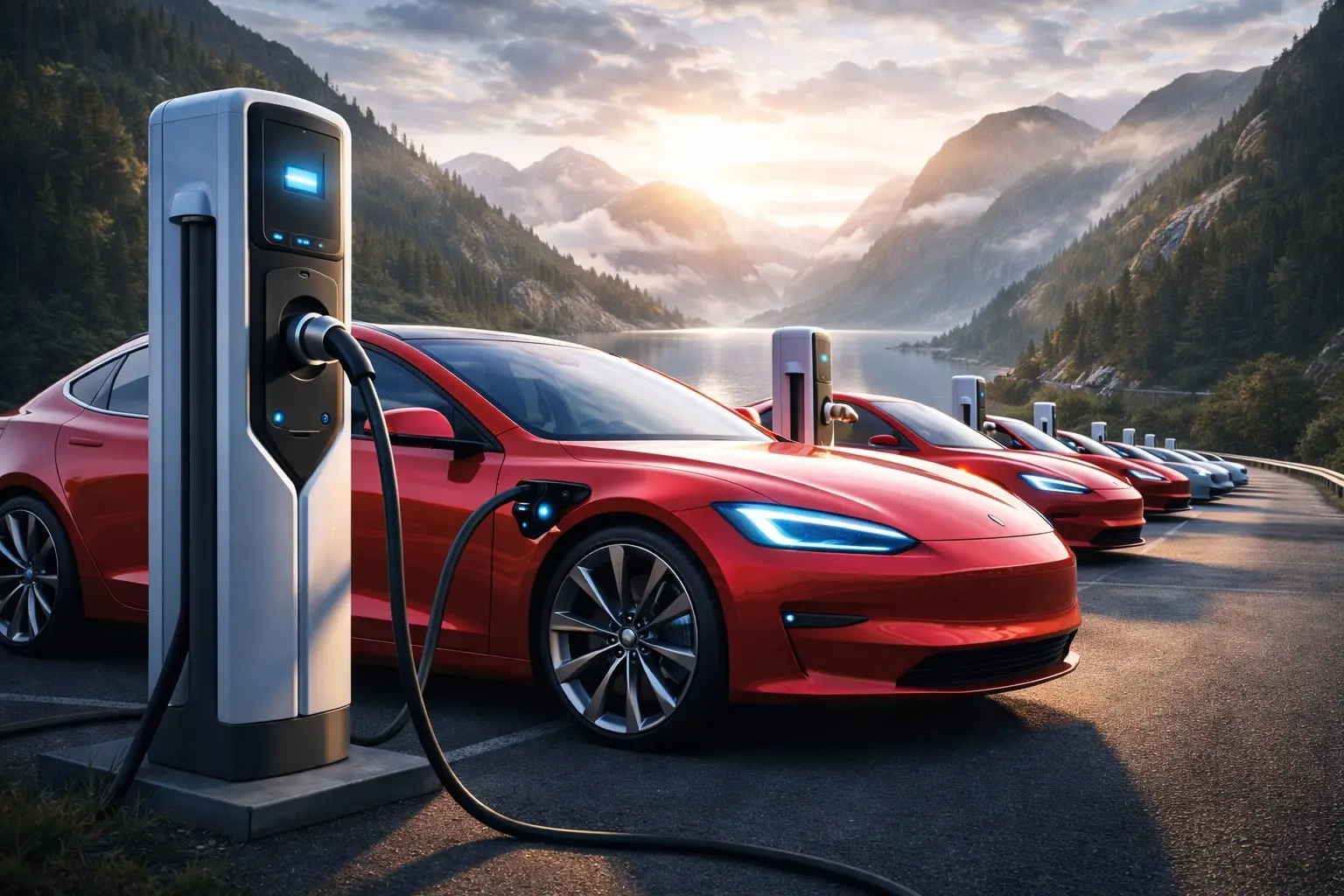
In the last decade, electric vehicles (EVs) have surged from a niche innovation to a dominant force reshaping the global automotive market. What was once a futuristic concept, silent motors, zero tailpipe emissions, and mobile battery packs, is now mainstream reality. Across cities, highways, and even remote regions, electric cars are rapidly gaining ground, driven by technological advances, government policies, consumer interest, and the pressing need for sustainable transport solutions.
According to recent global industry data, electric car sales are expected to exceed 20 million units in 2025, representing roughly one in every four new cars sold worldwide, a remarkable milestone that signals electric mobility’s shift from early adoption to mass-market adoption.
In this comprehensive article, we explore the forces behind this swift growth, share expert insights, examine regional differences, and anticipate what’s next for electric mobility on a global scale.
The Current Landscape of Electric Vehicles
Global electric car sales have exploded in recent years. From around 14 million units in 2023, the number of EVs sold globally climbed to over 17 million in 2024 and is projected to surpass 20 million in 2025, an escalation of more than 25% year-over-year.
This surge reflects a rapid shift in consumer preferences and industry strategies:
- Market share growth: In 2024, electric cars accounted for roughly 20% of total new car sales, up from about 18% the previous year.
- Fleet expansion: The global EV fleet is expanding fast, with tens of millions of electric cars now on the road worldwide, more than triple the fleet size from just a few years ago.
- Broadening model availability: Nearly 800 different electric car models were on offer by 2024, with more than 1,000 expected by 2026.
This rapid adoption is not just a statistic, it’s a reflection of real changes in mobility, consumer attitudes, and industrial transformation.
China: The Global Powerhouse
China continues to dominate the global EV market, both in production and sales volume. In 2025, Chinese automaker BYD surpassed Tesla to become the largest electric car seller in the world, delivering more than 2.25 million EVs, a key indicator of China’s industrial strength and competitive pricing strategy.
Recent reports show that EVs, including plug-in hybrids, made up more than half of all car sales in China in 2025, with around 13 million vehicles sold, an increase compared to the prior year.
“China’s electrification strategy, combining scale, cost advantages, and localized supply chains, is a blueprint for how fast EV markets can grow when supported by targeted policy and manufacturing strength,” says Dr. Robert Chen, Auto Industry Analyst.
But China’s growth hasn’t been without challenges. Recent data suggests slowing market expansion and reduced government subsidies, which could temper growth in the near term.
United States and Europe: Mixed Signals
In North America and Europe, electric car adoption has also moved forward, albeit at a slower pace compared with China.
In the U.S., sales remain significant but have faced headwinds due to policy shifts and reduced incentives, resulting in slower growth and strategic reevaluations by traditional automakers. For example, General Motors reported charges exceeding $6 billion linked to declining EV sales as incentives were scaled back.
Meanwhile, in Europe, EV adoption varies widely by country. The UK recently set record EV market share levels, surpassing 38% of new car registrations, marking a strong second place after China.
Sarah Müller, European transportation expert, notes:
“Europe’s EV trajectory reflects strong regulatory influence. While subsidy renewals and CO₂ targets have spurred growth, market maturity means growth bursts will be more gradual than in China—but no less strategic.”
Emerging Markets Step Up
Beyond established regions, emerging economies in Asia, Latin America, and Africa are speeding up EV adoption. In many of these markets, electric car sales grew by more than 60% year-over-year.
Thailand and Indonesia are representative examples, with increasing EV market shares due to incentives and infrastructure investments. Similarly, Latin American countries like Brazil and Colombia reported sharp increases in EV sales, signaling that electrification is reaching a truly global scale.
Dr. Amina Bello, sustainable mobility researcher, explains:
“Emerging markets are leapfrogging older automotive technologies. With improving grid infrastructure and more affordable models, EV adoption here is shaping the next phase of global electrification.”
Technology and Infrastructure: Keeping Pace
Maintaining the momentum of the electric transformation depends on expanding charging infrastructure and advancing battery technology.
Battery costs are declining steadily, making electric cars more affordable, while improvements in energy density and charging speeds continue to address consumer concerns about range. A recent market analysis predicts that over 60% year-on-year increases in public charging infrastructure will continue to bolster confidence in EV adoption worldwide.
Additionally, the growing variety of EV models, from compact city vehicles to SUVs and luxury cars, ensures that more consumers find an electric option that suits their needs.
Environmental and Economic Impact
The rise of electric cars is about more than numbers. it’s about environmental transformation. Electric vehicles significantly reduce tailpipe emissions, lowering urban air pollution and helping countries meet climate goals. By displacing fossil fuel consumption, EV adoption contributes directly to reductions in greenhouse gas emissions, an essential step toward global climate targets.
Maria González, Environmental Policy Specialist, emphasizes
“Each electric car on the road contributes not only to cleaner air but to a broader shift in energy use. When powered by renewables, EVs represent a cornerstone in the fight against climate change.”
What’s Next for the Electric Car Revolution?
Despite impressive growth, the transition to electrified transport is ongoing and uneven across regions.
Forecasts and Future Trends
- EV market share is expected to reach approximately 40% by 2030, as more regions adopt stricter emissions regulations and more models become available.
- The balance between battery electric and plug-in hybrid vehicles is expected to shift toward fully electric models over time.
- Emerging markets and expanding manufacturing bases will continue to diversify the global EV landscape.
Industry leaders agree: the next decade will determine whether electric cars fully displace traditional internal combustion engine (ICE) vehicles as the dominant form of passenger transport.
Final Thoughts
The global electric car revolution is well underway. With soaring sales, expanding markets, evolving technology, and strong environmental incentives, electric vehicles are redefining personal transportation and transforming the automotive industry at an unprecedented pace. As innovation continues and markets diversify, the road ahead for electric mobility promises even greater milestones, and a cleaner, more sustainable future for drivers around the world.
FAQs
Global electric car sales are projected to exceed 20 million in 2025, up from 17 million in 2024.
Electric vehicles are expected to represent around 25% of new car sales globally in 2025.
China leads by a wide margin, accounting for more than half of global electric car sales.
Tesla was overtaken by BYD due to competitive pricing, stronger growth in Chinese markets, and policy shifts affecting incentives.
Yes, electric cars produce zero tailpipe emissions and can significantly reduce carbon footprints, especially when charged with renewable energy.
Policies such as tax incentives, emission targets, and subsidies are major drivers of EV adoption globally.
Battery technology improvements and economies of scale are lowering EV costs, making them more accessible to consumers.
Public charging infrastructure is growing rapidly worldwide, improving convenience and reducing range anxiety.








Leave a Reply