

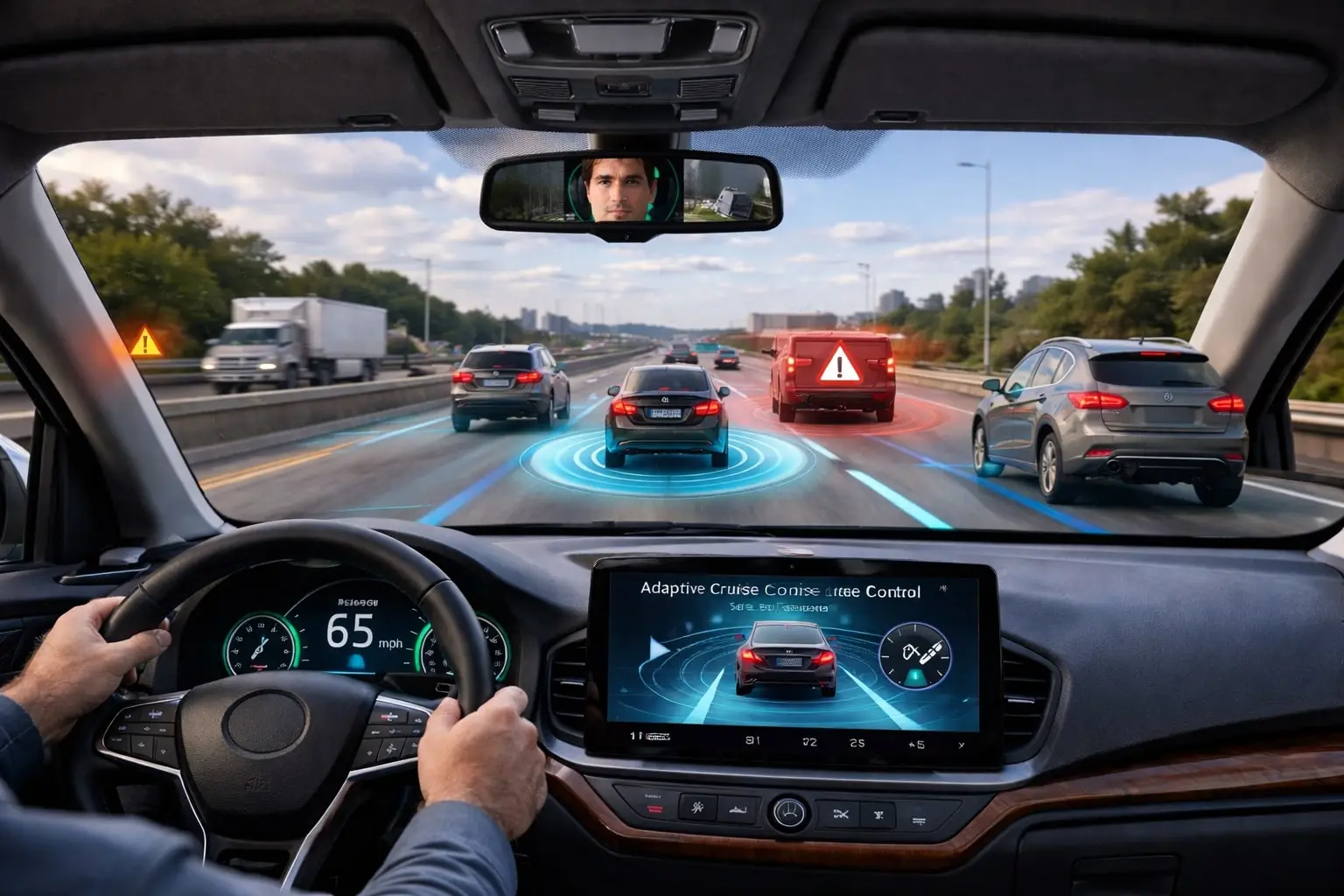
As modern vehicles become increasingly electrified and connected, Advanced Driver Assistance Systems (ADAS) have transitioned from luxury-only innovations to essential safety features across mainstream and premium cars. These systems augment driver awareness and response, helping to prevent collisions, reduce driver fatigue, and pave the way toward fully autonomous vehicles in the future.
Dr. Alicia Montgomery — Senior Automotive Engineer
“Advanced Driver Assistance Systems have shifted from optional extras to mainstream safety technology across the U.S. vehicle lineup. Modern sensor fusion, especially combining cameras, radar, and high-precision maps, is enabling hands-free driving in certain conditions. However, drivers must remain engaged and aware; these systems are not yet substitutes for human attention.”
Recent industry developments illustrate how quickly this technology is evolving. Global Tier 1 automotive supplier Mobileye has secured major deals to integrate next-generation ADAS into millions of vehicles worldwide, including hands-free highway driving, automated lane changes, and traffic-jam assist capabilities, underscoring automakers’ competitive push for safer and smarter driving suites.
What Is ADAS? A Clear Definition
Advanced Driver Assistance Systems (ADAS) are a set of hardware (sensors, radars, cameras) and software systems designed to assist the driver with real-time decision-making and automatic control actions while driving. The goal is to enhance safety, reduce human error, and improve driving comfort.
According to automotive safety sources, ADAS technologies can significantly reduce traffic injuries and fatalities by alerting drivers to hazards or even taking corrective action when needed.
Levels of ADAS / Automation
ADAS features in vehicles today typically range from Level 1 to Level 2 or 2+ (partial automation):
- Level 1: Single assistance, a feature like lane departure warning or adaptive cruise control.
- Level 2: Combined assistance, multiple automated functions (e.g., adaptive cruise + lane centering) with constant driver supervision.
- Level 2+: Hands-free assistance on highways but still requiring attentive drivers.
Currently, Level 3 and above systems remain rare in consumer cars due to technical, legal, and safety challenges, though Mercedes-Benz has begun commercializing a city driving assist under regulatory constraints in select markets.
How ADAS Works? Core Technologies
An ADAS suite typically includes a combination of different sensors:
- Cameras — recognize lane markings, signs, traffic lights
- Radar — detects other vehicles and measures speed and distance
- Ultrasonic sensors — support parking and close-range alerts
- LiDAR (limited use today) — high-precision distance mapping
- GPS & high-definition maps — used in advanced hands-free systems on pre-mapped highways
Software aggregates this sensor information, feeding it into real-time decision engines that warn drivers or adjust steering, throttle, or braking.
Core ADAS Features in U.S. Vehicles — What Drivers Experience?
Most current U.S. vehicles equipped with ADAS offer many of the features below:
1. Adaptive Cruise Control (ACC)
Maintains a safe following distance by automatically adjusting speed based on traffic conditions ahead.
2. Lane Keep Assist (LKA) / Lane Centering
Keeps a vehicle centered in its lane using gentle steering adjustments.
3. Automatic Emergency Braking (AEB)
Detects imminent frontal collisions and applies brakes if the driver fails to respond.
4. Blind Spot Monitoring (BSM)
Alerts drivers when another vehicle is in their blind spot.
5. Traffic Jam Assist
Combines cruise control and lane guidance to ease stop-and-go driving in congested traffic.
6. Driver Monitoring Systems
Track driver attention and alertness via cameras and sensors.
7. Hands-Free Driving on Highways
Systems like Ford BlueCruise and GM Super Cruise allow hands-free operation on mapped highways, still requiring driver attention. These features, although not fully autonomous, represent a significant step toward safer, less fatiguing driving experiences.
Leading ADAS Platforms in the U.S. Market 2026
1. Ford BlueCruise
Ford’s BlueCruise remains one of the market’s most advanced hands-free ADAS systems. BlueCruise connects over 130,000 miles of “Blue Zones” mapped highways in the U.S. and Canada and uses cameras and driver monitoring to ensure safe usage.
Recent hardware and software upgrades (BlueCruise 1.4) have improved hands-free times, enhanced curve handling, and made weather performance more reliable, bringing Ford closer to real-world everyday use.
Strengths:
- Hands-free capability on mapped highways
- Predictive takeover alerts
- Effective driver attention monitoring
2. GM Super Cruise / Ultra Cruise
GM’s Super Cruise leverages HD mapping, LiDAR-calibrated camera systems, and radar feeds to enable hands-free driving. It covers hundreds of thousands of highway miles and boasts a strong safety record.
GM’s Ultra Cruise, rolling out on newer models, expands this capability to city streets and neighborhood roads, offering curb-to-curb automated navigation, still with a hands-on driver required by regulation.
Super Cruise is also expected to evolve into an “eyes-off” version around 2028, where drivers could momentarily divert their gaze while the system controls the vehicle.
3. Mercedes-Benz MB.Drive Assist Pro
Mercedes is entering the Level 2+ realm with MB.Drive Assist Pro, capable of handling urban traffic navigation while maintaining driver supervision. This system can stop at red lights, steer through city corners, and handle acceleration and braking, a notable expansion beyond basic highway autonomy.
4. Rivian Autonomy Platform
Electric vehicle maker Rivian plans to introduce a hands-free driver assist in 2025, advancing to an “eyes-off” capability by 2026. This mirrors competitors’ progress toward more comprehensive ADAS in mainstream EVs.
Safety and Effectiveness: What the Data Says?
Studies show that ADAS can reduce crash frequency substantially when used correctly. For example:
- Vehicles equipped with AEB and lane-keeping technologies demonstrate reduced collision rates compared to non-ADAS vehicles.
- By 2028, major ADAS features like blind-spot monitoring and lane departure warning are expected in over 50% of registered vehicles in the U.S. reflecting rapid adoption trends.
This rapid integration is leading to safer roadways, even as the full safety benefit unfolds over decades — especially as millions of older vehicles without ADAS remain in service.
Rajiv Menon — Automotive AI Research Lead
“The industry’s trajectory is toward increasingly capable ADAS systems that blur the line between driver assistance and driver automation. Hands-free highway systems like BlueCruise and Super Cruise demonstrate that the future of daily driving will be both safer and more efficient, but regulatory and ethical hurdles continue to shape implementation timelines.”
Latest Updates in ADAS Technology 2026
Mobileye’s Expansion into Mass Production
Mobileye, a key supplier of ADAS technologies, has secured a significant deal with a top U.S. automaker to provide next-generation Surround ADAS systems, which include hands-free driving, automated lane changes, and traffic-jam assistance powered by AI and cloud mapping.
Mercedes-Benz Urban Driving Assist
Mercedes’ MB.Drive Assist Pro is rolling out in the U.S. this year, enabling urban driving maneuvers, including traffic light and intersection handling, under driver supervision.
Ford BlueCruise Enhancements
Ford has upgraded its hands-free capabilities with improved lane centering, curve handling, and better performance in challenging weather, marking incremental steps toward real-world reliability.
Final Thoughts
Advanced Driver Assistance Systems are no longer futuristic luxuries, they are mainstream safety technologies that significantly enhance driver awareness, reduce accident risk, and foreshadow the transition toward autonomous vehicles. While today’s systems still require engaged drivers, features such as adaptive cruise control, hands-free highway driving, and urban navigation assistance reflect remarkable progress.
The continued push by companies like Ford, GM, Mercedes-Benz, Rivian, and major suppliers such as Mobileye suggests that ADAS capabilities will expand rapidly over the next decade, bringing more intelligent, connected, and safer driving experiences to millions of U.S. drivers.
FAQs
Most new vehicles, from economy cars to luxury models, include ADAS features like adaptive cruise control, lane-keep assist, and automatic emergency braking.
No. Today’s ADAS ranges up to Level 2 or Level 2+ automation. Drivers must stay alert and ready to take control at all times.
Some ADAS features (e.g., rear-view cameras) are required in the U.S., but comprehensive suites are not yet legally mandated on all vehicles.
Systems such as Mercedes’ MB.Drive Assist Pro show early urban capabilities, but most ADAS systems are still optimized for highway conditions.
Hands-free systems like BlueCruise and Super Cruise are considered safe when used as directed, with driver attention monitoring required.
Yes. Heavy rain, fog, or snow can reduce sensor performance, requiring drivers to intervene manually.
Prices vary. ADAS features are often included in higher trim levels, and hands-free packages may be optional upgrades costing hundreds to a few thousand dollars.
Potentially, some insurers offer discounts for vehicles with certain ADAS features due to their collision-reduction benefits.










Leave a Reply