
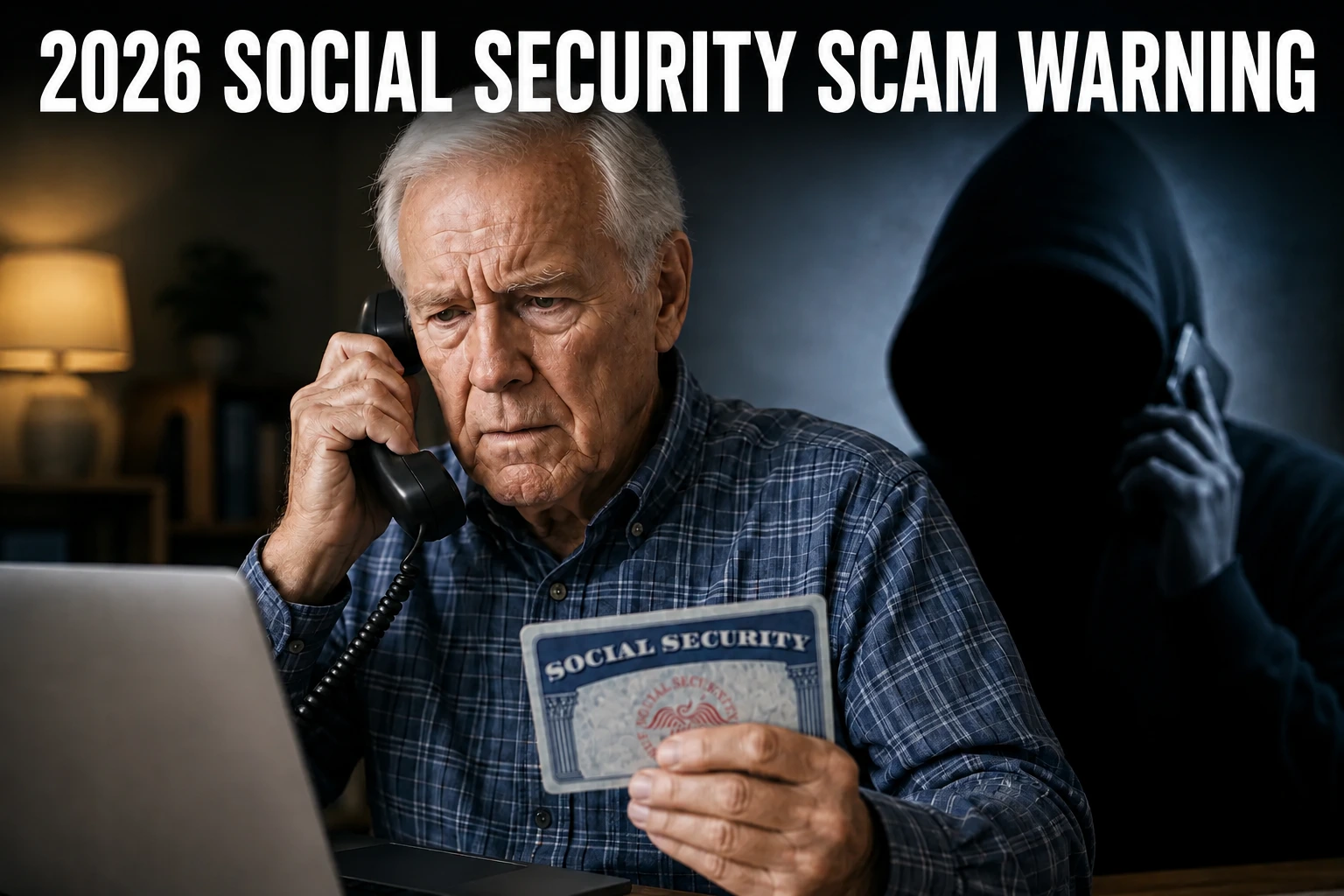
A phone rings, an email arrives, or a text message appears to come from the Social Security Administration. The message sounds official and may even include your name, a Social Security-related logo, or information that makes the communication look genuine. Then comes the warning: your benefits could be suspended, your Social Security number may have a problem, or you must act immediately. For many Americans, especially retirees who depend on monthly Social Security payments, that kind of message can create instant fear. But in 2026, that fear is exactly what scammers are trying to exploit.
The Social Security Administration (SSA) and its Office of the Inspector General (OIG) continue to warn Americans about impersonation scams involving phone calls, emails, text messages, websites, social media messages and even traditional mail. The OIG has specifically warned about a surge in fraudulent emails claiming to provide access to Social Security statements. Those messages may use official-looking designs, logos and government language to convince people to click a link or download an attachment.
Why Social Security Scams Are Becoming More Convincing in 2026?
Scammers are no longer relying only on obviously suspicious phone calls. Modern scams can be carefully designed to look like legitimate government communications. A fraudulent email may use familiar Social Security terminology, while a fake website may imitate the appearance of an official government page. In some cases, criminals may already possess pieces of a person’s information and use those details to make their story sound believable.
The SSA OIG warned in February 2026 about a significant increase in fraudulent emails supposedly offering access to Social Security statements. According to the warning, clicking links in these messages can expose people to identity theft, financial loss or compromised data. Some fraudulent messages may also contain attachments or direct victims to websites designed to collect personal and financial information. This is why simply recognizing a strange email address is not always enough. Consumers should pay attention to the behavior of the message. If someone contacts you unexpectedly and immediately demands information, money or urgent action, stop before responding.
The Biggest Warning Sign: Someone Says You Must Act Immediately
One of the most powerful tools scammers use is urgency. A criminal may tell you that your Social Security benefits will be stopped today, your Social Security number has been linked to criminal activity, or your account has been compromised. The person may then demand that you confirm your identity, provide financial information or transfer money. The goal is to prevent you from thinking.
Official guidance from the SSA OIG says people should remain calm and avoid providing money or personal information when they feel pressured, threatened or frightened. Government employees will not threaten you, demand immediate payment or attempt to gain your trust through suspicious documents or photographs. A legitimate problem with your Social Security account should not require you to panic. If you receive an unexpected message, stop the conversation and independently contact the agency through an official channel.
Watch Out for Fake Social Security Statement Emails
One of the most important scam warnings for 2026 involves emails claiming that your Social Security statement is ready. The email may tell you to click a button to view or download your statement. The page may look professional and may even contain familiar government branding. But the link can take you somewhere completely different. The SSA OIG has warned that fraudulent emails can imitate legitimate government communications using official-looking language, colors, logos and formatting. A fraudulent link could lead to a fake website designed to steal information or could expose your computer to malicious software.
The safest approach is simple: don’t use the link inside an unexpected email. Instead, open your browser yourself and go directly to the official SSA website. The agency has specifically advised people to navigate to SSA.gov themselves when accessing Social Security statements.
Fake Calls, Texts and Social Media Messages Are Also a Risk
Social Security scams aren’t limited to email. A scammer may call and claim to be an SSA employee. Another may send a text message saying there is an issue with your benefits. You could also encounter a fraudulent Social Security account or advertisement on social media. The message might contain a phone number and tell you to call immediately. Once you call, another person may pretend to be a government employee and ask for information.
Read More: 2027 Social Security COLA and Medicare Costs: How Much Could Retirees Really Receive?
The SSA says criminals impersonating the agency may contact people by phone, email, text, letter or social media. They may even use the name of a real employee or send an image or attachment to make the communication appear legitimate. That means a familiar name or official-looking document does not automatically prove that the communication is real.
Never Pay Money to “Protect” Your Social Security Number
Another major warning sign is a demand for payment. A scammer may tell you that you must pay money to protect your Social Security number or prevent your benefits from being suspended. They could request payment through unusual methods, including gift cards, cryptocurrency, wire transfers or cash. The SSA OIG has made its position clear: SSA and OIG will not ask you to transfer money to protect your Social Security number. They also will not ask you to meet someone to exchange cash, gift cards, cryptocurrency or gold bars. If someone claiming to represent Social Security asks for this type of payment, treat it as a major red flag.
Be Careful With Your Social Security Number and Personal Information
Your Social Security number can be extremely valuable to criminals because it may be combined with other personal information to attempt identity theft or financial fraud. Never provide sensitive information simply because someone claims to be from Social Security.
Be particularly cautious if an unexpected caller or message asks for your:
- Social Security number
- Bank account information
- Credit or debit card information
- Online account password
- Security codes
- Date of birth
- Copies of identification documents
Even if the person knows some information about you, don’t assume the communication is legitimate.
Check the Website Before Entering Information
A professional-looking website can still be fraudulent. Scammers can create websites that closely resemble government pages. Before entering personal information, check the web address carefully. Official federal government websites generally use .gov domains. However, don’t rely on the appearance of a website alone. The safest practice is to type the official website address into your browser yourself rather than clicking a link supplied by an unexpected message. The SSA OIG has specifically warned that legitimate government agencies use official .gov email addresses, while fraudulent messages may imitate their appearance.
Read More: Social Security Maximum Benefit 2026: Who Can Receive Up to $5,181 a Month?
What Should You Do If You Receive a Suspicious Social Security Message?
If you receive a suspicious call, email, text, letter or social media message, don’t panic.
- First, stop communicating with the sender: Don’t click links, download attachments or call the number supplied in the suspicious message.
- Second, don’t provide additional information: If the person asks for your Social Security number, bank details or payment, refuse and end the conversation.
- Third, verify independently: If you believe there could genuinely be an issue with your benefits, contact Social Security using contact information obtained directly from the official SSA website.
- Fourth, report the scam: The SSA OIG encourages people to report Social Security-related scams.
And importantly, don’t feel embarrassed if you already responded. The OIG specifically advises victims not to be ashamed if they shared personal information or experienced a financial loss. Taking action quickly can still be important.
Families Should Talk to Older Relatives About These Scams
Scammers frequently target people who receive government benefits because they know Social Security payments are financially important to many households. A simple conversation with parents, grandparents or other relatives can make a significant difference. Explain that an unexpected call demanding immediate action should never be handled in a hurry.
Families can also establish a simple rule: If someone claims to be from Social Security and asks for money or sensitive information, stop and verify the request independently. In March 2026, SSA and OIG held the seventh annual National “Slam the Scam” Day to raise awareness about government impersonation fraud. SSA reported that the Federal Trade Commission received more than 330,000 complaints involving government impersonation in 2025, a 25% increase from the previous year.
What Makes a Social Security Scam Look Real?
The most dangerous scams are convincing because they combine several tactics:
- Official-looking language: The message may use government terminology.
- Fear: You may be told your benefits or Social Security number are in danger.
- Urgency: You may be given only a few minutes or hours to respond.
- Personal information: The scammer may already know your name or other basic details.
- Fake websites: A link may lead to a page designed to look legitimate.
- Impersonation: The caller may claim to be an SSA employee or another government official.
When several of these warning signs appear together, stop and verify the communication independently.
Read More: Social Security Card Replacement 2026: How to Get a New Social Security Card Online
Final Thoughts
The most important lesson from the Social Security Scam Warning 2026 is simple: scammers want you to react before you have time to think. A frightening phone call, urgent email or threatening text can make even a careful person act quickly. But taking a few minutes to stop, verify and think can prevent a potentially serious financial or identity-theft problem. Social Security scams continue to evolve, and official-looking communications can be surprisingly convincing. The best defense is not knowing every scammer’s latest script. It is knowing the basic rules: don’t panic, don’t send money, don’t click suspicious links, don’t reveal sensitive information and independently verify unexpected communications. If something appears suspicious, report it rather than engaging with the sender.
For Social Security recipients and their families, awareness is one of the strongest protections available. When a message claims that your benefits are in immediate danger, remember that fear is exactly what the scammer wants. Slow down, verify the information through official channels and never allow an unexpected caller or message to control your next move.



Leave a Reply