

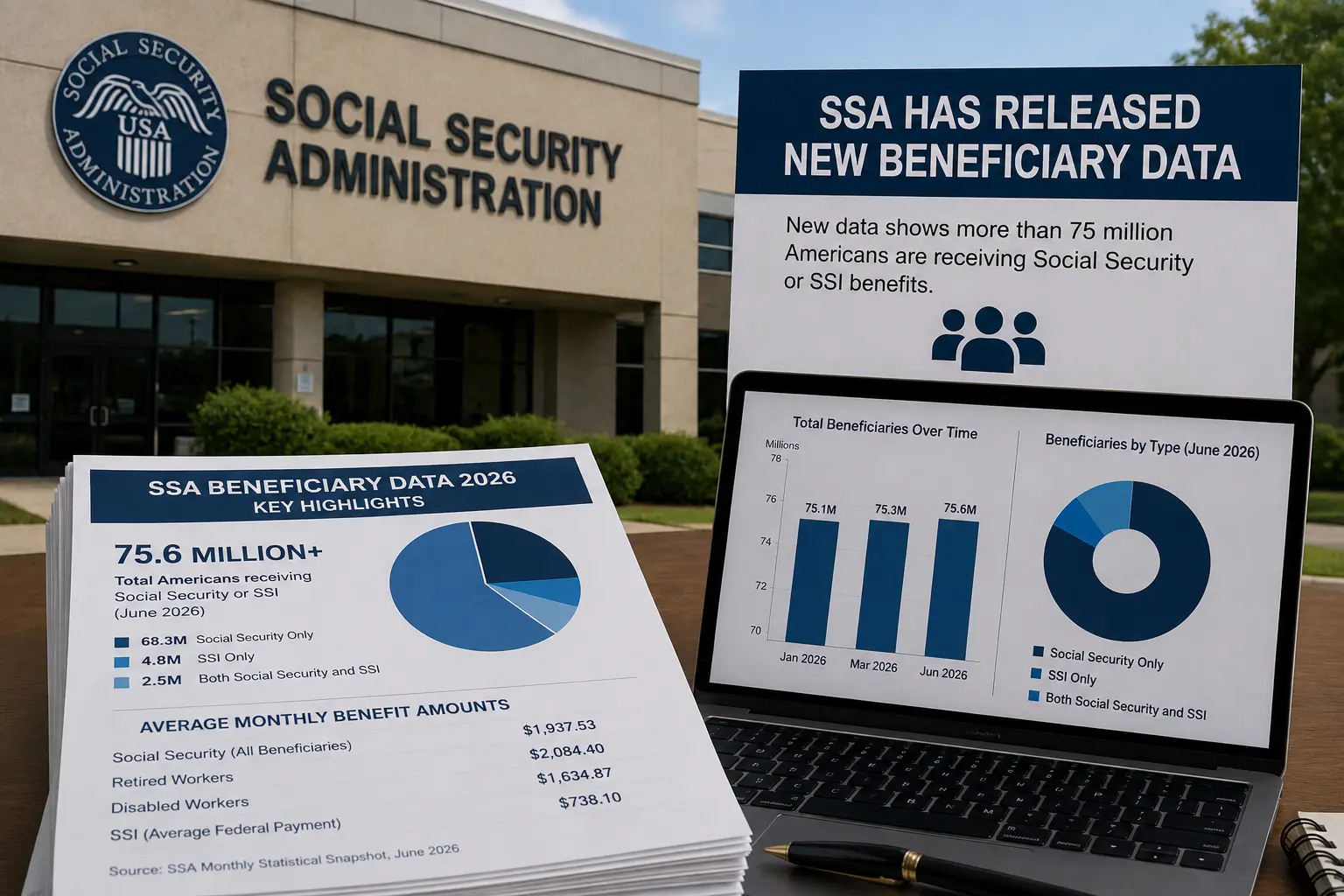
The Social Security Administration (SSA) has released its latest beneficiary data, offering a fresh look at how many Americans are receiving Social Security and Supplemental Security Income (SSI), what types of benefits they receive, and the average amount being paid each month.cThe latest Monthly Statistical Snapshot for June 2026, released in July, shows that more than 75.6 million people were receiving Social Security, SSI, or both programs. The data provides an important picture of the people who depend on these programs for retirement, disability, survivor and supplemental income support.
For retirees and other beneficiaries, the numbers are more than statistics. They help show the enormous scale of America’s Social Security system and provide useful context as discussions continue around benefit increases, cost-of-living adjustments, retirement planning and the future of the program.
More Than 75 Million People Are Receiving Social Security or SSI
According to the SSA’s June 2026 data, approximately 75.656 million people were receiving Social Security, SSI, or both.
Of that total:
- About 68.332 million received Social Security only.
- Approximately 4.810 million received SSI only.
- About 2.514 million received both Social Security and SSI.
The figures come from the SSA’s Master Beneficiary Record and Supplemental Security Record and are based on 100% data. The agency also notes that people entitled to both a primary and secondary Social Security benefit are counted only once in the combined beneficiary table. This makes the latest report particularly useful for understanding how broadly federal retirement and income-support programs affect American households.
Older Americans Make Up the Largest Group
The latest data shows that people aged 65 and older continue to represent the largest beneficiary group. In June 2026, approximately 59.154 million people aged 65 or older were receiving Social Security, SSI, or both. That included roughly 56.648 million people receiving Social Security only, 1.081 million receiving SSI only and 1.425 million receiving both programs.
These figures highlight the central role Social Security continues to play in retirement income. For many older Americans, Social Security is not simply an additional source of money. It can be an important part of the monthly household budget used for housing, groceries, utilities, medical expenses and other everyday costs.
Social Security Benefits Averaged About $1,938 in June
The SSA’s June report also provides a breakdown of monthly Social Security benefits. There were approximately 71.255 million Social Security beneficiaries receiving benefits in June 2026. The total monthly benefit amount was approximately $138.058 billion, producing an average monthly benefit of about $1,937.53. However, this average should not be interpreted as the amount every beneficiary receives.
Social Security payments vary significantly depending on a person’s earnings history, claiming age, work record, benefit type and other factors. For example, the June data shows an average monthly benefit of approximately $2,084.40 for retired workers. Benefits for spouses, children, survivors and disabled workers were different because each category has its own eligibility rules and benefit calculations.
Retirement Benefits Remain the Largest Category
Retirement benefits represent the biggest part of the Social Security program. In June 2026, approximately 57.453 million people were receiving retirement benefits. Retired workers accounted for about 54.620 million of those beneficiaries, with an average monthly benefit of approximately $2,084.40.
Spouses of retired workers accounted for about 2.092 million beneficiaries, while approximately 741,000 children of retired workers were also receiving benefits. The numbers demonstrate why even relatively small changes to Social Security payments can have a substantial effect on household finances across the country.
Millions Receive Disability Benefits
The new data also provides an important look at Social Security Disability Insurance (SSDI). In June 2026, approximately 8.008 million people were receiving Disability Insurance benefits. The average monthly benefit across the Disability Insurance category was approximately $1,496.16. Within that group, approximately 7.006 million were disabled workers, with an average monthly benefit of about $1,634.87.
The data also includes spouses and children receiving benefits based on a disabled worker’s record. These figures matter because Social Security is not solely a retirement program. Millions of Americans depend on the disability and survivor portions of the system as well.
SSI Data Shows Millions Also Receive Supplemental Support
The SSA’s report separately tracks Supplemental Security Income. In June 2026, approximately 7.324 million people received SSI. The average monthly SSI payment was about $738.10, although actual payments varied by individual circumstances.
The age breakdown shows:
- About 1.018 million recipients were under age 18.
- Approximately 3.800 million were between ages 18 and 64.
- Around 2.506 million were 65 or older.
The SSA’s separate SSI monthly statistics report lists approximately 7.324 million recipients in June, providing more detailed information about eligibility categories and payment types.
How the New Data Compares With Earlier 2026 Numbers?
The latest numbers also show how the beneficiary population has changed during 2026. In January, the SSA reported approximately 75.060 million people receiving Social Security, SSI or both. By March, that figure had increased to approximately 75.342 million. In June, it reached about 75.656 million.
That does not mean every month will produce a steady increase. Beneficiary counts can change for many reasons, including new awards, deaths, changes in eligibility and other administrative factors. Still, the progression illustrates the enormous number of Americans connected to these federal programs.
What the New Beneficiary Data Means for Retirees?
For current retirees, the latest data does not automatically mean that an individual’s Social Security check will increase. The figures are statistical information about the beneficiary population. They should not be confused with a new benefit increase, payment schedule change or newly approved legislation. However, the data can help retirees understand the broader Social Security landscape.
The average benefit figures also demonstrate why people should avoid assuming that everyone receives the same monthly amount. A retiree receiving significantly more or less than the national average is not necessarily receiving an incorrect payment. Individual Social Security benefits are based on personal circumstances.
What About the 2027 COLA?
The release of new beneficiary data is also likely to attract attention because Americans are already watching for information about the 2027 Social Security cost-of-living adjustment (COLA). The June beneficiary statistics do not establish the 2027 COLA. Social Security’s annual COLA is calculated using a specific inflation measure and is officially announced later in the year. Therefore, early estimates or forecasts should not be treated as a confirmed 2027 increase. Beneficiaries should rely on official SSA announcements when the final COLA is released.
Why These Numbers Matter for the Future of Social Security?
The latest beneficiary figures provide an important reminder of the scale of America’s retirement and income-support system. With more than 75 million people receiving Social Security, SSI or both, decisions involving benefit formulas, eligibility rules, taxation, retirement age or COLA calculations can affect millions of households. The numbers may also become part of broader discussions about Social Security’s long-term finances and policy changes.
For beneficiaries, however, the most important lesson is to separate confirmed information from proposals, predictions and social media claims. A new statistical report does not automatically mean a new law has been passed or that payments are changing.
Final Thoughts
The SSA’s latest beneficiary data provides a detailed snapshot of Social Security and SSI in 2026. More than 75.6 million people were receiving one or both programs in June, while more than 71 million were receiving Social Security benefits specifically. The average Social Security benefit was approximately $1,937.53 per month, although individual payments vary considerably. The data also shows how important retirement, disability, survivor and SSI benefits remain to millions of Americans.
As discussions surrounding Social Security COLA, retirement benefits and possible legislative changes continue, beneficiaries should pay close attention to official SSA announcements rather than relying on unverified claims. For retirees and families planning ahead, understanding the latest beneficiary numbers is one useful piece of the larger Social Security picture.
FAQs
According to the SSA’s June 2026 Monthly Statistical Snapshot, approximately 75.656 million people received Social Security, SSI or both programs.
The average monthly Social Security benefit across all Social Security beneficiaries was approximately $1,937.53 in June 2026. Retired workers had an average monthly benefit of approximately $2,084.40.
Approximately 57.453 million people were receiving retirement benefits in June 2026, including about 54.620 million retired workers.
The SSA reported approximately 7.324 million SSI recipients in June 2026. The average monthly SSI payment was approximately $738.10.
No. The June 2026 beneficiary report does not determine the 2027 Social Security COLA. The annual COLA is calculated under the program’s established formula and officially announced by the SSA later in the year.




Leave a Reply